

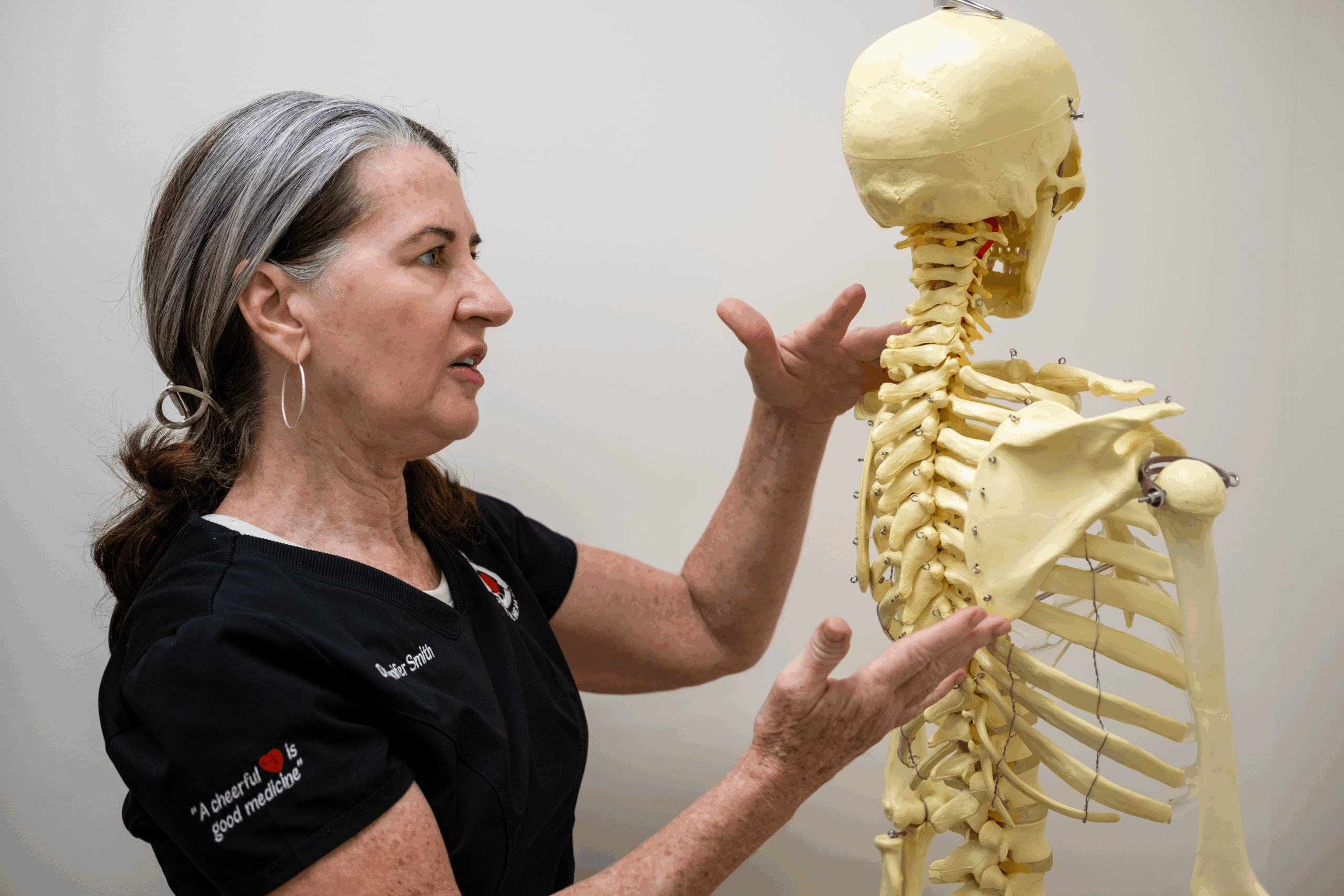
When most people think of chiropractic care, they picture a spine adjustment – that satisfying crack that brings instant relief. And while spinal manipulation remains a cornerstone of what we do here at Atlas Total Health, the field of chiropractic medicine has grown into something far broader and more powerful. Today, a modern chiropractic clinic like ours offers a comprehensive toolkit for healing the entire musculoskeletal system. We address everything from chronic muscle tension and nerve pain to disc injuries and soft tissue damage.
At Atlas Total Health, we believe that true healing requires treating the whole body, not just the symptoms. That’s why we’ve expanded our services to include evidence-informed therapies like dry needling, cupping therapy, and spinal disc decompression. Here’s a look at how these approaches work and why they might be the missing piece in your recovery.
The Shift Toward Whole-Body Musculoskeletal Care
The musculoskeletal system is a complex, interconnected network of bones, muscles, tendons, ligaments, fascia, and nerves. A problem in one area rarely stays isolated! A hip misalignment can cause knee pain, a tight thoracic spine can contribute to headaches, and a compressed disc can send shooting pain into the arms or legs. Effective treatment has to account for this complexity.
Chiropractors are trained in a wide range of therapeutic techniques that complement spinal manipulation to target muscles, connective tissue, circulation, and nerve function simultaneously. The result is longer-lasting relief and a more complete recovery overall.
Dry Needling: Releasing the Root of Muscle Pain
Dry needling is one of the most effective therapies in modern musculoskeletal care. Using thin, sterile filament needles (similar to acupuncture needles), a trained practitioner inserts them directly into “trigger points”: those tight, knotted areas in muscle tissue that cause local pain and often refer pain to other parts of the body.
Unlike acupuncture, which is rooted in Traditional Chinese Medicine and focuses on energy meridians, dry needling is grounded in Western anatomy and physiology. The goal is simple: disrupt the dysfunctional muscle fiber and stimulate a local twitch response to reset the muscle to its normal, relaxed state. The result is often an immediate reduction in pain and an increase in range of motion.
Dry needling is particularly effective for:
• Chronic neck and back pain
• Tension headaches and migraines
• Shoulder impingement and rotator cuff issues
• Hip flexor tightness and IT band syndrome
• Sports injuries and post-surgical rehabilitation
When combined with chiropractic adjustments, dry needling creates a powerful one-two punch: the adjustment corrects joint alignment and nerve interference while dry needling addresses the muscular component that may have been pulling the spine out of place to begin with.
Cupping Therapy: Ancient Technique, Modern Results
Cupping therapy has been practiced for thousands of years across Chinese, Middle Eastern, and Egyptian traditions. Today, it’s been refined and validated by modern sports medicine. It gained widespread attention after Olympic athletes were spotted sporting those distinctive circular marks on their skin.
In cupping therapy, specially designed cups are placed on the skin and a suction effect is created that gently lifts the tissue upward. This negative pressure technique does something unique: rather than compressing tissue, it decompresses it. This lifting action separates the layers of fascia, muscle, and skin to encourage blood flow, and break up adhesions.
At Atlas Total Health, we use cupping as part of a comprehensive treatment plan to help patients dealing with:
• Muscle soreness and post-workout recovery
• Fascial restrictions and scar tissue
• Upper and lower back pain
• Poor circulation and inflammation
• Respiratory issues and rib mobility
The reddish purple circles left behind after cupping are temporary marks and are not bruises. They’re a sign that stagnant blood and metabolic waste have been drawn to the surface where the body can more efficiently clear them. Most patients find the sensation deeply relaxing, and many report significant reductions in pain and tightness after only one session.
Disc Decompression Therapy: Relief for Your Most Stubborn Pain
Disc-related pain is the most debilitating condition many people have ever experienced. Herniated discs, bulging discs, degenerative disc disease, and the nerve compression that comes with these conditions can make everyday activities feel impossible. Standard treatments often fall short and lead many patients to consider surgery as their only option.
Spinal disc decompression therapy offers a non-invasive alternative that gets to the root of the problem. Using a special motorized traction table, our practitioners gently and precisely stretch the spine in a way that creates negative intradiscal pressure. This essentially creates a vacuum effect within the disc space. This serves two critical functions:
1. Retraction of herniated material.
The negative pressure can gently draw bulging or herniated disc material back toward its center, relieving pressure on the surrounding nerves.
2. Promoting nutrient flow.
Spinal discs have limited blood supply and rely on a process called imbibition — the absorption of nutrients through movement and pressure changes — to stay healthy. Decompression therapy enhances this process, bringing oxygen and nutrients into the disc to support healing.
Disc decompression is typically delivered in a series of sessions and is often combined with chiropractic adjustments, therapeutic exercises, and other supportive therapies to maximize outcomes. Many patients who had been told surgery was their only option have found lasting relief through disc decompression.
Why an Integrated Approach Works Better
No single therapy is a silver bullet. The real power of modern chiropractic care lies in how these therapies work together. At Atlas Total Health, we assess each patient as an individual. We evaluate posture, movement patterns, strength imbalances, lifestyle factors, and medical history before we build a personalized treatment plan that may draw from any combination of modalities.
For example, a patient with chronic lower back pain from a herniated disc might receive disc decompression to address the structural issue, dry needling to release the compensatory muscle spasms that developed around it the disc, cupping therapy to improve circulation in the surrounding tissue, or chiropractic adjustments to restore proper spinal alignment throughout the process. This layered approach doesn’t just manage pain, it addresses the underlying causes and supports the body’s natural ability to heal.
Is This Approach Right for You?
Whether you’re a competitive athlete, a desk worker dealing with chronic stiffness, a weekend warrior recovering from an injury, or someone who has struggled with pain for years without finding lasting relief, the expanded model of chiropractic care at Atlas Total Health may have something to offer you.
Chiropractic care is no longer just about your spine! It’s about helping your entire musculoskeletal system function the way it was designed to: pain free with full range of motion. We invite you to schedule a consultation and discover what a comprehensive, whole-body approach to care can do for you.
Ready to Experience the Difference?
Contact Atlas Total Health today to schedule your comprehensive evaluation and take the first step toward lasting relief.